

Nigeria's impressive new Art Museum of West Africa (Mowaa) has ended up in the crosshairs of regional political struggles during the time it was expected to – but was unable – to welcome visitors to the visitors for the initial occasion.
The Major Initiative
The six-hectare facility is located in the center of Benin's urban center, administrative center of the southern region of Edo – and contains an historical dig and buildings created by high-profile British-Ghanaian architect Sir David Adjaye, best known for the Washington African American Museum that was inaugurated in the US capital in 2016.
It has been five years in the creation – and is designed to celebrate both the history and the present of creativity in the area known for the cultural artifacts, cultural objects taken from the city's royal palace by British soldiers in the 1800s.
Readiness and Potential
It is impressive – and ahead of the scheduled opening, Mowaa was energetic with staff committed to prove it is a place that can rival established museums and galleries in the Western world.
Inside conservators carefully opened artworks from protective packaging, inspecting each piece and taking detailed documentation before arranging them on walls and bases.
Technicians calibrated temperature regulation systems. In the scientific facility, personnel calibrated instruments designed to preserve historical artefacts.
Financial Backing and Economic Vision
The venture has been the concept of investor Phillip Ihenacho – presently Mowaa's executive director.
"I aim us to have a significant economic benefit on communities in this region," he explained to the press, mentioning that he aspired to make Benin City "a tourism center."
Mowaa, a charitable Nigerian institution, sees itself generating over 30,000 work positions and contributing over $80m annually to the area arts sector through collaborations and events.
Financial Support and Government Issues
It has needed $25m to reach this point – capital collected from multiple contributors, such as the international partners, the UK museum and the Edo state government.
But currently the local government has revoked permission from under it – canceling the utilization of the land on which the building was erected.
An Edo state spokesperson clarified this was because in the early agreements it had referred to itself as Edo Museum of West African Art – and it had later eliminated "the state identifier" from its designation.
Unrest and Official Response
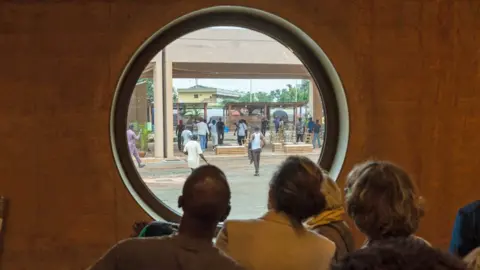
This statement was preceded by protests on Sunday, when activists invaded the campus insisting it be called the Royal Benin Museum.
A boisterous assembly confronted overseas dignitaries at the museum before the launch – compelling them to be hurried away under official guard.
President Bola Tinubu has even stepped in to attempt to settle the conflict, creating a special task force to do some damage control.
Political Complexities
But how has this turned into so divisive – and such a PR disaster?
A great deal of it stems from local power struggles at a local state level, as it was Edo's previous governor Godwin Obaseki – whose term in office finished last year – who was a major backer of the initiative.
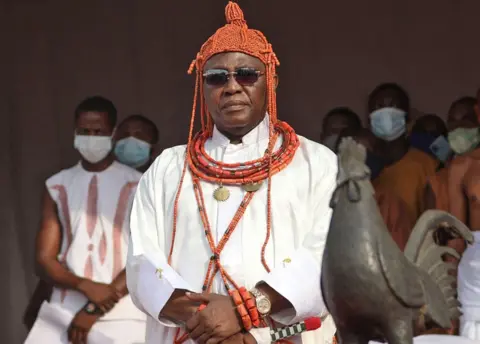
And it looks like the administration of the current leader, a key associate of the regional monarch, referred to as the royal figure, may desire greater involvement in the initiative. The activists on the weekend, for case, were calling for that the institution be placed under the authority of the current Oba.
The Cultural Artifacts Debate
This highlights the disputed topic of the historical artworks, one of the continent's most celebrated historical legacy.
Because although the museum does finally open, these bronzes will be clearly not present.
They are brass, elephant tusk and timber carvings that once embellished the king's residence of the ancient kingdom before colonial troops stole them in the colonial era during a punitive expedition.
Nowadays, numerous remain distributed across museums in the West -- such as the UK institution, Berlin's Humboldt Forum and the American museum.
Repatriation Campaigns
Their repatriation has become one of the most debated conversations in the worldwide cultural sector. About 150 have presently come back – and additional are scheduled to be repatriated.
When plans for the museum in the urban center were originally proposed in the pre-pandemic era, the movers and shakers on Nigeria's art scene anticipated it would become their ideal location – a modern campus to show them off to the global audience.
But the issues became confused some time back after the central administration announced that the Oba would be the proper guardian of any returned bronzes – and the monarch's court pushed for a institution under the royal family's direct control, against the wishes of the former governor.
Political Navigation
This placed Mowaa in a delicate position: asserting a clear stance on repatriation while staying tactful on guardianship – and highlighting its larger purpose, which led to|c


